My Teaching Approach & Methodology

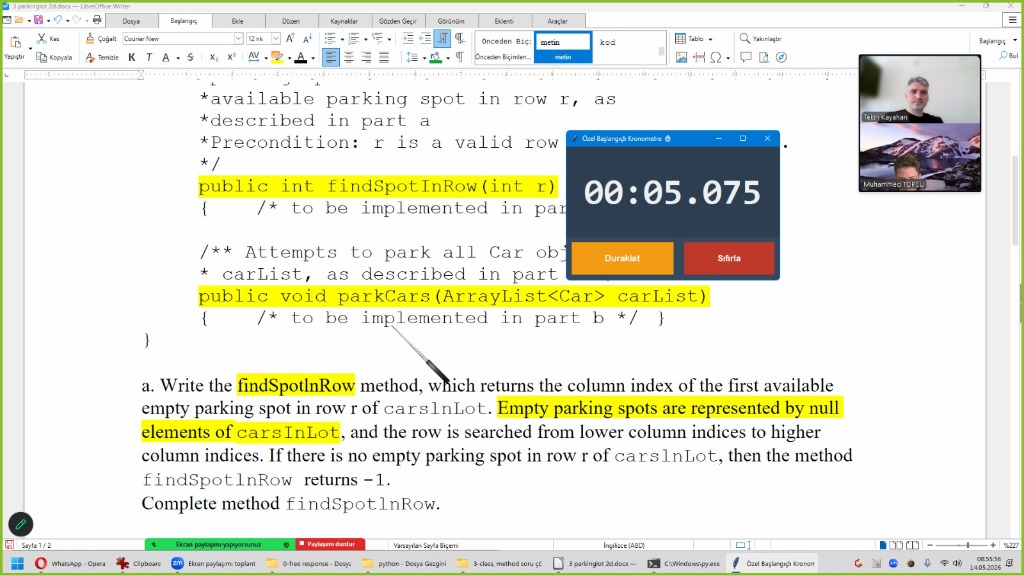
We approach the learning process holistically and progress in manageable steps according to the student's level.

College Board Fall 2025 Curriculum

Fully aligned with the updated 4-unit framework, official exam weighting, and scoring guidelines.

Instant Detection & Diagnosis

With the instant quizzes and mini tests I give during lessons, I immediately identify and close knowledge gaps.

Step-by-Step to a 5

Reaching a score of 5 by building solid foundations in small, manageable steps according to the student's level.

College Board Fall 2025 Framework

The New 4-Unit AP Computer Science A Syllabus

Study plan precisely aligned with College Board's official instructional unit weights and essential knowledge requirements.

Unit 1 15% – 25% Weight

Using Objects and Methods

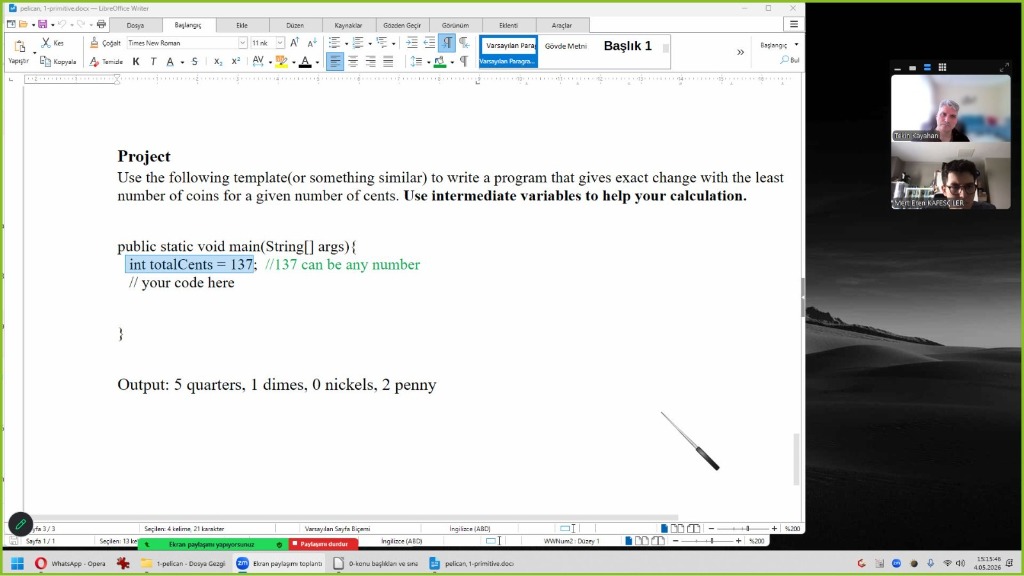
Core Java syntax, primitive variables (int, double, boolean), arithmetic expressions, and object reference mechanics.

  • Variable declaration, assignment & casting operators
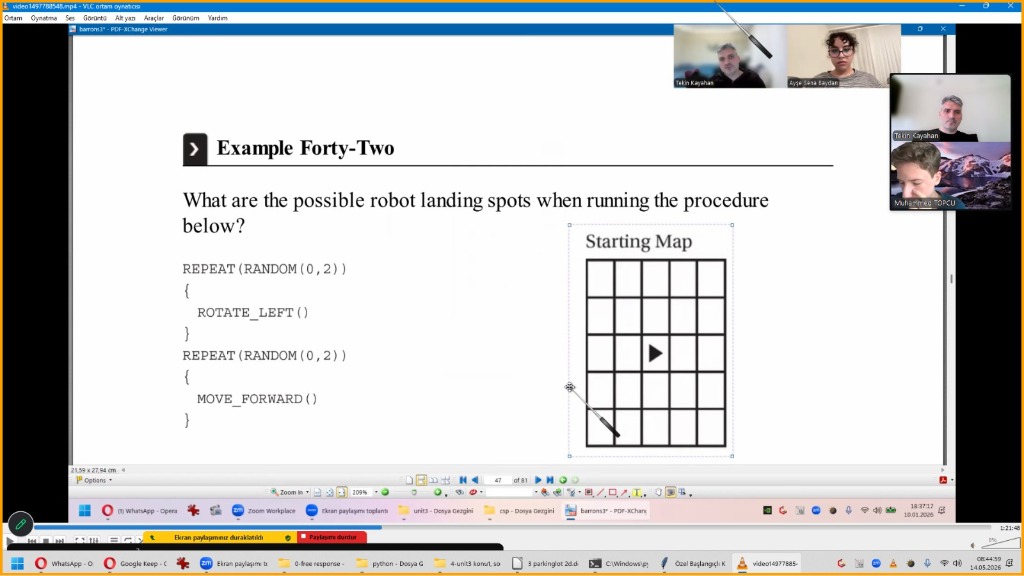
  • Math class methods (abs, pow, sqrt, random)
  • String manipulation (length, substring, indexOf, equals)
Unit 2 25% – 35% Weight

Selection and Iteration

Boolean logic, branching conditionals, looping structures, and algorithmic run-time tracing.

  • Boolean expressions, De Morgan's laws & short-circuit evaluation
  • if-else branches and multiway nested selection
  • while & for loops, nested iteration, eliminating off-by-one errors
Unit 3 10% – 18% Weight

Class Creation

Designing user-defined classes modeling real-world problems, data encapsulation, and FRQ 2 (Class Design) mastery.

  • private instance variables & data encapsulation
  • Constructor overloading and initializing object state
  • Accessor / Mutator methods & the this reference
Unit 4 • Most Critical 30% – 40% Weight

Data Collections

The highest-weighted section of the exam! Array & matrix data structures, file I/O, search/sort algorithms, and recursion.

  • 1D Arrays & dynamic ArrayList<E> algorithm implementation
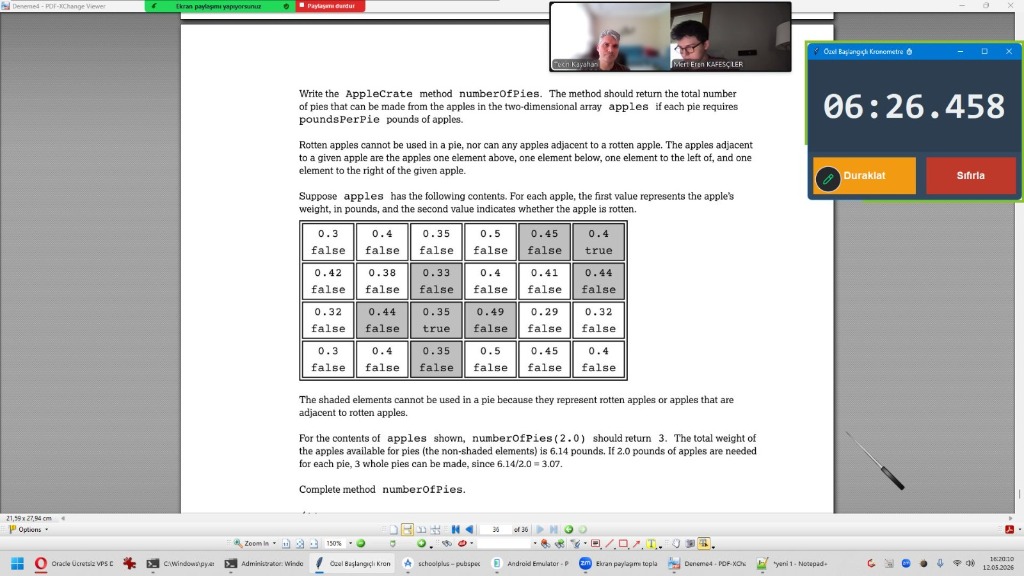
  • 2D Arrays: row-major & column-major nested traversals
  • File reading with Scanner, Linear/Binary Search, Sorting & Recursion
Exam Architecture

42 Multiple-Choice & 4 Free-Response (FRQ) Blueprint

Proven strategies and College Board scoring rubric insights to maximize points across the 3-hour exam.

Section I

Multiple-Choice Section

42 Questions 90 Minutes 55% of Score

Questions heavily assess Analyze Code (37–53%) and Develop Code (22–38%). We train students with trace tables and rapid logical deduction techniques to solve questions within pacing targets.

Section II

Free-Response (FRQ)

4 Questions 90 Minutes 45% of Score

We teach students how to capture every "algorithm point" according to official College Board scoring guidelines, preventing deductions for subtle boundary or edge-case mistakes.

FRQ 1

Methods & Control Structures

Constructing algorithms using control statements, loops, and explicit String class methods.

Weight: 7 Points
FRQ 2

Class Design

Writing an entire class from scenario specifications, private fields, constructors, and methods.

Weight: 7 Points
FRQ 3

Data Analysis with ArrayList

Filtering, processing, and aggregating objects in a dynamic list without index-skipping bugs.

Weight: 5 Points
FRQ 4

2D Array Traversals

Row-major and column-major nested traversals, matrix manipulation, and boundary validation.

Weight: 6 Points
College Board Fall 2025 AI Policy

Independent Code Mastery in the Era of AI (Dual Competency)

The College Board strictly prohibits AI tools during AP Computer Science A examinations. Achieving a top score of 5 requires independent programming problem-solving: mental code tracing, debugging without assistance, and solid computational fluency.

Mental Code Tracing

Tracking variable states line by line on paper and in memory without needing an execution environment.

Independent Debugging

Diagnosing and fixing syntax, logic, and runtime exceptions on your own.

Exam Day Confidence

Complete confidence to ace 42 MCQs and 4 FRQs within 90 minutes each without relying on external aids.

What Do We Do During the Course?

Comprehensive Topic Instruction

Grasping the logic of Java programming through systematic instruction from simple to complex and plenty of worked examples.

End-of-Unit Quizzes

Reinforcing what has been learned and closing gaps with regular quizzes at the end of every unit.

Real College Board Exam Solutions

Detailed analysis of real College Board exam questions from past years (including unreleased questions) and work on FRQ scoring rubrics.

Realistic Practice Exams

Exam rehearsal with at least 10 Multiple Choice + Free Response practice exams during the preparation process.

Assessment and Parent Reports

An instant progress, homework tracking and assessment report prepared for parents and students after every lesson.